Knowing how a compressor fails before it fails is the foundation of any meaningful predictive maintenance program. Each failure mode has a distinct cause, a distinct sensor signature, and a distinct intervention window. Fleet managers who understand the six most common failure patterns can prioritize monitoring, interpret alerts correctly, and make better decisions about repair vs. replacement — not just respond when the unit goes down.
This article covers scroll and reciprocating compressors specifically — the two types that dominate commercial refrigeration fleets in food logistics applications. Centrifugal and screw compressors have different failure profiles and are less common in this application context.
1. Bearing Wear
Bearing wear is the most common compressor failure mode in commercial refrigeration fleets. It affects both scroll and reciprocating compressors, and it's the failure mode with the longest and most reliable predictive window.
Cause: Normal mechanical wear over service life, accelerated by inadequate lubrication (low oil level, oil degradation, refrigerant dilution of oil), operating at high ambient temperatures, or excessive cycling. Refrigerant migration during off-cycles — liquid refrigerant entering the compressor sump and diluting the oil — is a common accelerant for bearing wear in units that experience frequent short-cycling.
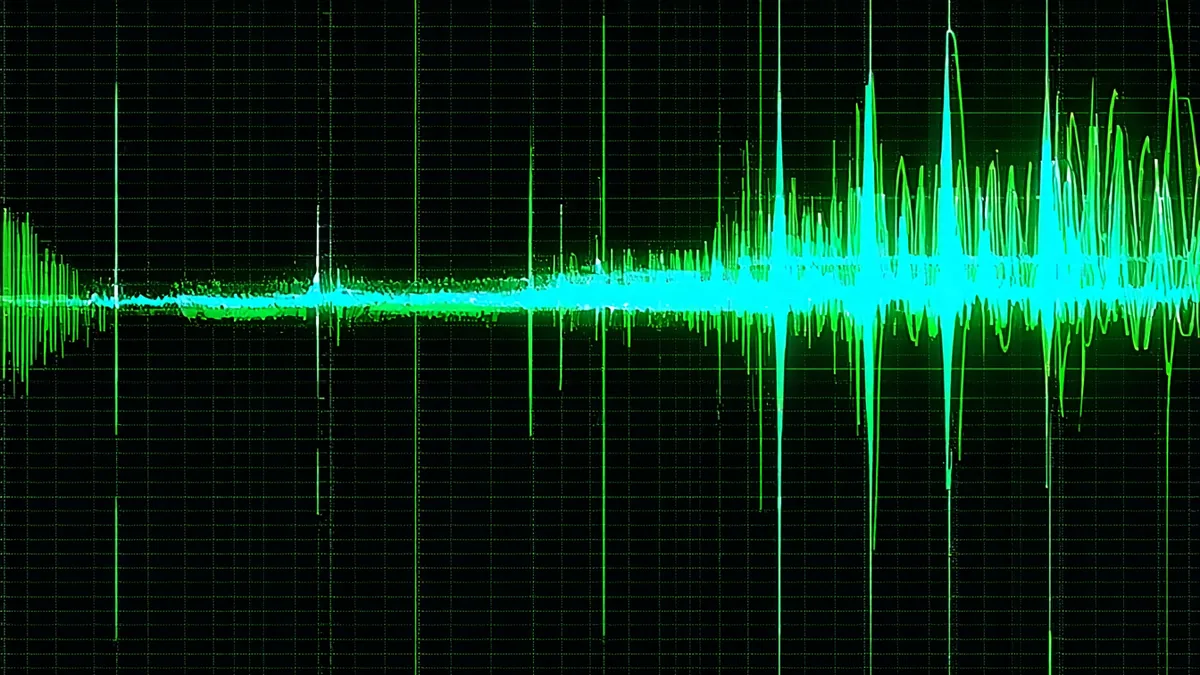
Sensor signature: The ball pass frequency outer race (BPFO) and ball pass frequency inner race (BPFI) are characteristic vibration frequencies that appear in the mid-frequency range (approximately 60–350 Hz for typical refrigeration compressor bearings) as the bearing surface develops defects. These appear as sidebands around the characteristic defect frequency in an FFT spectrum, typically 3–6 weeks before the bearing reaches a functional failure state.
Intervention window: 3–6 weeks from first detectable signature to failure. The longest predictive window of any common failure mode — ample time for a planned visit.
Repair: Bearing replacement. Cost-effective if caught early. If the bearing fails completely, rotor contact with the stator or scroll set can result in total compressor replacement rather than a bearing swap.
2. Scroll Tip Wear and Degradation
Scroll compressors dominate commercial refrigeration applications due to their efficiency and quieter operation compared to reciprocating units. But scroll sets wear — specifically, the tip seals on the scroll wraps degrade over time, increasing the tip clearance and reducing compression efficiency.
Cause: Normal wear over service life. Accelerated by inadequate refrigerant oil lubrication reaching the scroll set, operation at high pressure ratios (high ambient temperatures driving high condensing pressure), and contaminated refrigerant (moisture, acids, particulates) that accelerates surface wear.
Sensor signature: Declining volumetric efficiency — the compressor draws more current to produce the same cooling effect. Observable as suction pressure running slightly high for given conditions, discharge pressure slightly low, and suction line superheat elevated as refrigerant gas leaks past worn scroll tips. Broadband vibration elevation in the 500–1,000 Hz range as the increased tip clearance creates gas blow-by turbulence. This is more subtle than bearing wear signatures and requires a well-calibrated baseline to detect reliably.
Intervention window: 4–8 weeks from first detectable efficiency decline to compressor replacement (scroll sets are not field-serviceable in most hermetic units). The efficiency signal is gradual; catching it early allows a planned unit replacement rather than an emergency swap.
3. Liquid Slugging
Liquid slugging occurs when liquid refrigerant — rather than refrigerant vapor — enters the compressor and causes a hydraulic shock during the compression stroke. Liquid is incompressible; the result is mechanical damage to valve reeds in reciprocating compressors or damage to the scroll set in scroll compressors.
Cause: Refrigerant migration into the compressor crankcase during the off-cycle (condensed refrigerant sitting in the compressor sump), improper superheat setting resulting in wet vapor at the compressor suction inlet, or a defective expansion valve allowing refrigerant flooding. Common in units that lack crankcase heaters or whose crankcase heaters have failed.
Sensor signature: High-amplitude, low-frequency vibration spikes during compressor startup, coinciding with elevated suction pressure at startup and increased current draw. Unlike bearing wear, liquid slugging events often appear as intermittent spikes rather than a progressive trend. A single severe slugging event can cause immediate compressor failure; milder repeated events cause cumulative damage over weeks or months.
Intervention window: Varies. Severe single-event slugging: no useful warning. Repeated mild slugging: intermittent vibration spikes over days to weeks before catastrophic failure. The more useful prevention approach is identifying and correcting the root cause (failing crankcase heater, flooded startup conditions, metering device issues) before slugging events occur.
4. Electrical Faults
Electrical faults encompass a range of motor-winding issues, starting component failures (capacitors, contactors), and power quality problems. In hermetic and semi-hermetic compressors, the motor winding is in direct contact with refrigerant and oil — electrical failures can rapidly contaminate the system with carbon and acid burnout products.
Cause: Winding insulation degradation from thermal stress, contaminated refrigerant, overheating from high compression ratio or restricted airflow. Contactor wear and contact pitting from voltage spikes and normal switching cycles. Capacitor aging and dielectric failure (particularly in single-phase units with PSC motors).
Sensor signature: Electrical signature analysis (ESA) — monitoring motor current waveform for asymmetry and harmonic distortion — can detect early winding degradation. More commonly in field deployments, current monitoring flags compressors drawing significantly above or below nameplate current, which can indicate winding shorts or open windings. Contactors nearing end of life sometimes produce elevated contact resistance measurable as voltage drops and irregular starting patterns.
Intervention window: Variable. Winding degradation can be detected weeks before failure with ESA. Contactor failures can be rapid. Capacitors often fail without significant advance warning. Electrical faults represent the category of failure with the lowest predictive lead time — making periodic inspection of electrical components during PM visits an irreplaceable complement to sensor monitoring.
5. Refrigerant System Contamination
Refrigerant contamination — moisture, non-condensables, or acid from oil degradation — is a failure mode that damages the compressor indirectly. Moisture in the refrigerant circuit reacts with refrigerant and oil under the heat and pressure of compression to form hydrofluoric acid, which attacks copper plating onto steel components ("copper plating" is a classic sign of acid contamination in a system). Acid contamination destroys bearings, valve materials, and winding insulation over time.
Cause: Improper service procedures (allowing air/moisture into the system during repairs), refrigerant leaks that allow moisture ingress over time, oil degradation from overheating. Units that have had multiple refrigerant additions without acid testing are particularly at risk.
Sensor signature: Indirect indicators — acid contamination manifests as accelerated bearing wear, motor winding degradation, and efficiency decline. Oil analysis from a compressor oil sample (taken during a service visit) is the most direct detection method. Sensor-detectable precursors include abnormal discharge temperatures, efficiency decline consistent with valve deterioration, and elevated current draw.
Intervention window: If detected early via oil analysis, acid contamination can be addressed with system flushing and oil replacement before catastrophic damage. If discovered only after compressor failure, the entire system — including suction line filter-driers, expansion devices, and heat exchangers — may need cleaning to prevent recontaminating the replacement compressor.
6. Overheating and High-Discharge-Temperature Events
Overheating — compressor discharge temperature exceeding manufacturer limits, typically 250–275°F for most commercial refrigeration compressors — causes accelerated oil degradation, winding insulation breakdown, and mechanical stress that shortens compressor life even if the unit doesn't immediately fail.
Cause: High condensing pressure from dirty or blocked condenser coils, restricted airflow around the condenser (debris buildup, installation clearance violation), high ambient temperatures at the condenser location, refrigerant overcharge, or non-condensable gases in the system raising condensing pressure above the expected curve.
Sensor signature: Discharge line temperature trending above baseline. Discharge pressure running higher than expected for given ambient temperature. This is one of the most directly detectable failure precursors in sensor data — discharge temperature is often a standard monitoring point in commercial refrigeration controllers, and a trending elevation of even 8–12°F above the unit's baseline at similar ambient conditions is a meaningful signal.
Intervention window: 2–6 weeks from first detectable discharge temperature elevation to heat-related compressor degradation, depending on severity. The corrective action is often simpler than compressor repair — condenser cleaning, clearing obstructions, verifying refrigerant charge — making this one of the most cost-effective failure modes to intercept early.
We're not suggesting that all six of these failure modes can be detected with equal reliability using standard sensor monitoring — electrical faults and acute liquid slugging events have shorter or less predictable lead times than bearing wear and overheating. The value of understanding the failure mode taxonomy is in knowing which sensor patterns to prioritize in your monitoring program and which failure modes require physical inspection to complement sensor data.